
Reclaiming and Repairing Your Stolen and Recovered Vehicle
Receiving the call from the South African Police Service (SAPS) or your tracking company that your stolen vehicle has been recovered is an incredible relief. However, that phone call is just the beginning of a complex logistical and mechanical journey.
Between dealing with police pound release paperwork, daily storage fees, insurance assessors, and the actual damage caused by the thieves, the recovery process can quickly become overwhelming. Here is a clear, step-by-step guide on how to navigate SAPS protocols and ensure your vehicle is safely restored to its pre-theft condition.
The Paperwork: Navigating the SAPS Vehicle Pound
Before a panel beater can even assess the mechanical or cosmetic damage, the vehicle must be legally released from the SAPS pound. Pounds charge daily storage fees, so moving swiftly is critical. You or your appointed repairer will need four specific documents to facilitate the release:
- SAPS Case Number (CAS): The reference number generated when you initially reported the vehicle stolen. The investigating officer and the pound management rely entirely on this number.
- SAPS 522 Release Authority: This is the official release document. It must be signed by your specific investigating officer. Without this signature, the pound will absolutely not release the vehicle.
- Original NaTIS Certificate: The official vehicle registration document proving you are the legal owner.
- Original ID & Power of Attorney (PoA): If you cannot take time off work to collect the vehicle yourself, you can sign a witnessed Power of Attorney (stamped by a Commissioner of Oaths) allowing an accredited towing service or panel beater to handle the collection on your behalf.
The Hidden Danger: Why Security Restoration is Crucial
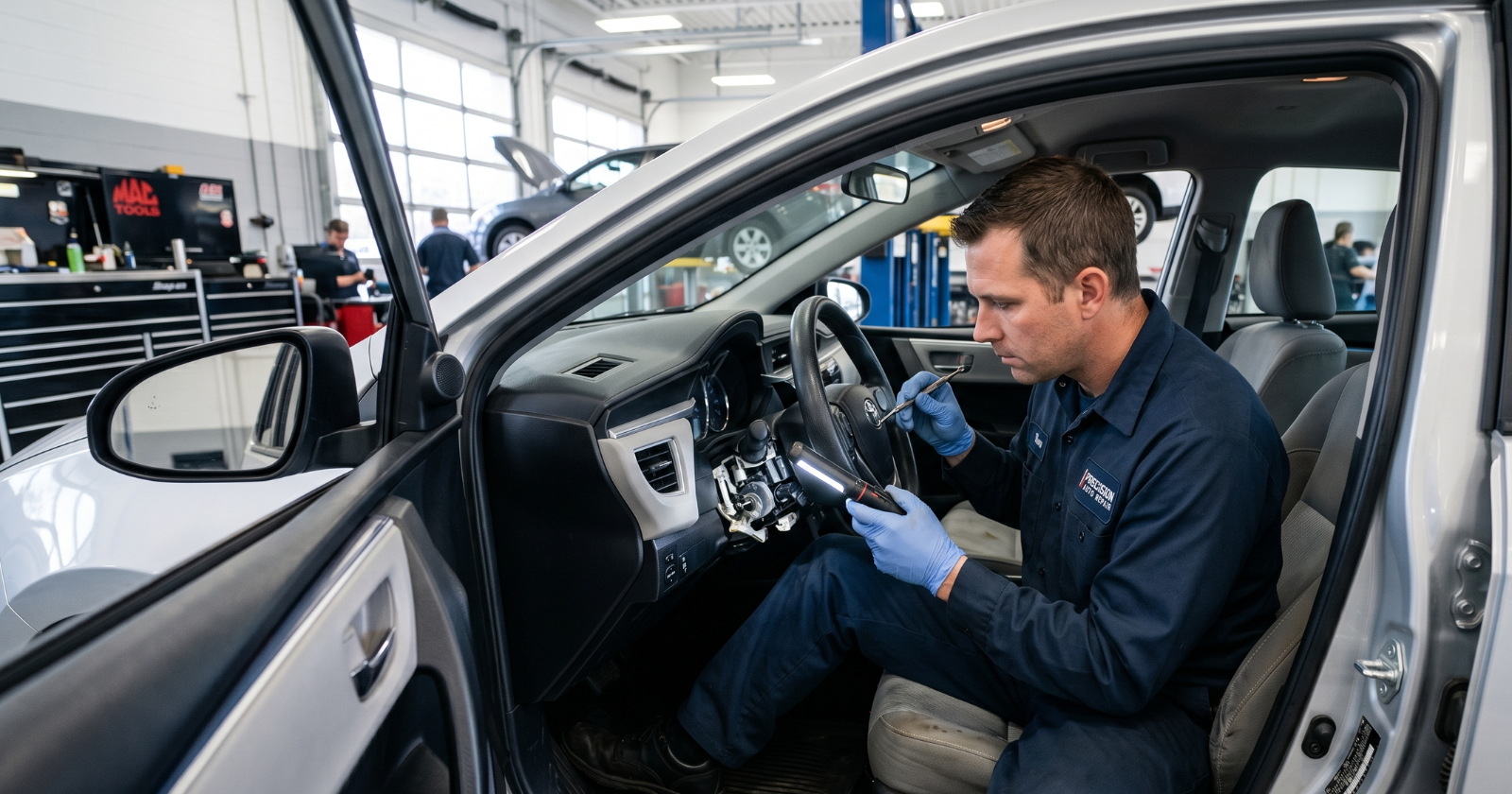
When thieves steal a modern car, they don't just break a window. They forcefully defeat the physical locks, bypass the immobiliser, and often strip the Body Control Module (BCM) or wiring harnesses to override the computer systems.
Choosing a cheap, "backyard" mechanic to simply patch the steering column and clear the dashboard warning lights is a massive security risk. The biggest hidden cost of a cheap recovery repair is the second theft.
If the vehicle's ignition barrels are not completely replaced, and the immobiliser and new keys are not digitally recoded to your specific Vehicle Identification Number (VIN), the old keys (likely still held by the syndicates) might still work. Professional, accredited repairers will deactivate all old key frequencies and install brand-new, factory-synced security systems.
Stolen & Recovered Repair Price Guide (2026)
The cost to repair a recovered vehicle varies wildly depending on how much time the thieves had with it. Standard structural guidelines usually fall into three categories:
- Cosmetic & Ignition Repair (From +-R8,500): Typical for a vehicle recovered quickly. The scope usually includes replacing a smashed window, fitting a new ignition barrel, and syncing new coded keys.
- Stripping & Electronics (From +-R28,000): Applies when thieves have started stripping the interior for parts. This requires replacing damaged console trim, airbags, infotainment systems, and repairing sliced wiring harnesses.
- Full Restoration (From R85,000+): Necessary for vehicles that were heavily stripped or involved in a collision during the getaway. This involves full structural repair, panel beating, repainting, and complete electronic system replacement.
The Professional Repair Process
When you hand your recovered vehicle over to a certified professional, the workflow should be highly structured to keep your insurance company informed:
- Pound Extraction: The repairer uses your PoA to settle the pound fees, release the vehicle, and tow it directly to a secure workshop.
- Insurer-Grade Strip & Scope: Technicians safely strip the damaged areas, document every cut wire and broken panel with a comprehensive photo set, and submit a line-item estimate to your insurance assessor.
- Mechanical & Cosmetic Restoration: Locks, wiring, and modules are replaced using Original Equipment Manufacturer (OEM) parts. Panel damage is beaten, prepped, and sprayed in a climate-controlled booth.
- Security Handover: All electronic modules are rescanned to ensure no hidden faults remain, and new keys are handed over with a comprehensive workmanship warranty.
Finding a Trusted Recovery Specialist
A stolen and recovered vehicle requires a unique blend of auto-electrical expertise, panel beating, and administrative patience. When searching our directory for a repair partner, always filter for accredited workshops. This accreditation ensures the facility has the strict OEM-level diagnostic tools required to genuinely secure your car's computer network, giving you peace of mind when you finally park it back in your driveway.

Be the first to comment!